Why Canasta Has Been the Go-To Party Card Game for Over 70 Years
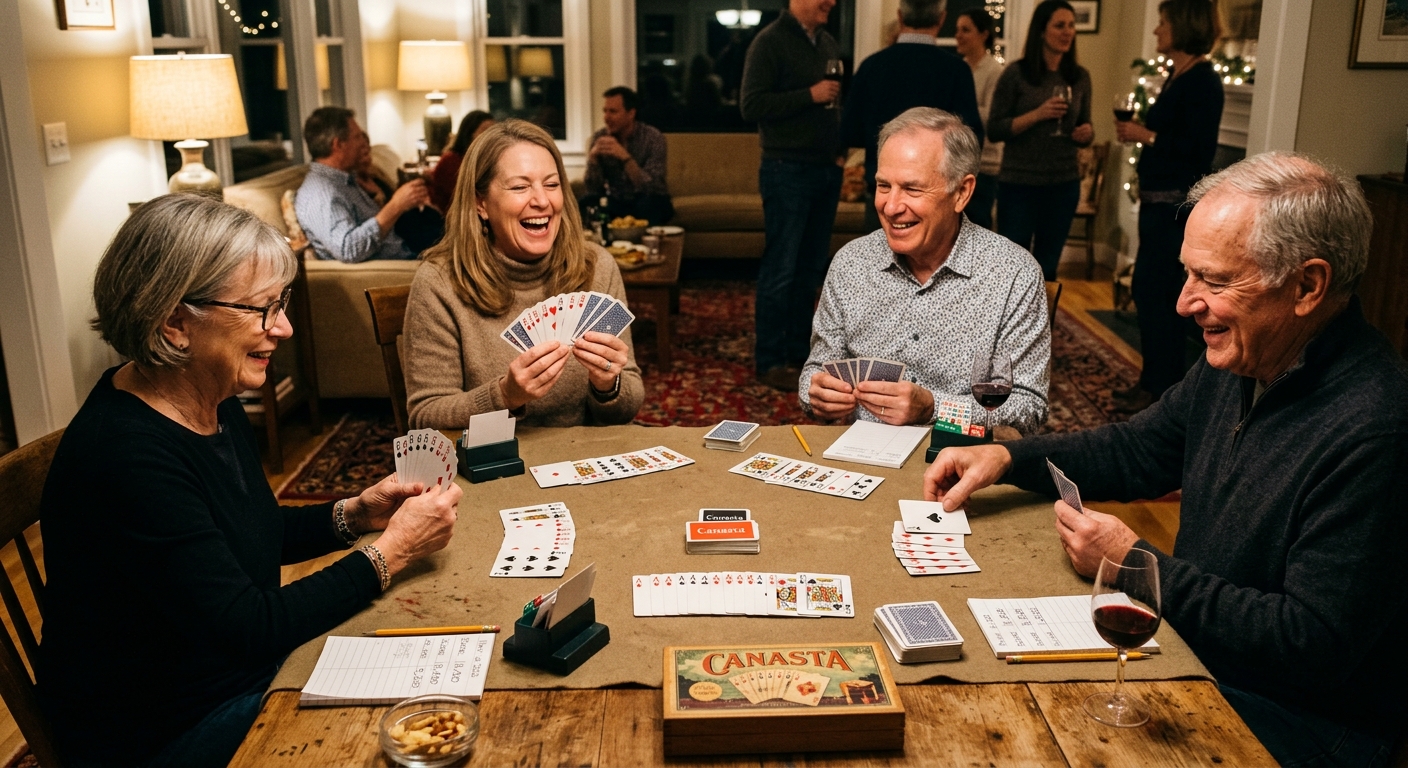
Dinner was finished. The plates had disappeared. Someone brought out two packs of cards, and suddenly nobody was ready to leave. That is the kind of evening Canasta made its own: four people leaning toward a growing discard pile, partners hoping for one useful card, and neighbors insisting they had time for another hand. Its mid-century boom turned ordinary living rooms into places of friendly rivalry. More than 70 years later, the reasons people stayed at those tables still make sense.
What Kept Everyone at the Table
- Canasta made an ordinary evening feel like a shared event.
- Partnerships and risky decisions gave every hand a personal story.
- Free browser play carries that familiar appeal into modern routines.
How Canasta Became an Evening Everyone Wanted to Join
Canasta originated in Uruguay in 1939. It spread through South America before reaching the United States, where it became a major card-playing craze around the turn of the 1950s. The timing helps explain the title's 70-year reach. This was a game that established itself in the social habits of an entire generation.
The setting mattered. A card evening needed little equipment, and hosts could arrange one at home. There was no venue to book. No elaborate entertainment was necessary. Two decks, a place to sit, and someone willing to explain the rules could carry the night.
Canasta fitted neatly into visits between neighbors and gatherings after dinner. Its familiar routine gave people a reason to meet again. Once a group learned the game, the next invitation almost wrote itself. Players wanted a rematch. Partners wanted another chance. Someone who had watched a hand wanted a seat.
Imagine a packed parlor with an extra chair pulled close to the action. At the main table, one player hesitates before discarding. A partner watches quietly. Across the table, an opponent has been waiting for that exact rank. The card lands, the pile changes hands, and the room suddenly gets louder. That small scene explains more about Canasta's appeal than a rulebook alone can.
A Familiar Starting Point With Plenty Left to Learn
Canasta belongs to the rummy family. Players build melds, which are groups of cards of the same rank. In the classic four-player game, partners combine their efforts. A meld that reaches seven cards becomes a canasta, giving the game its central achievement.
That basic aim is easy to understand. Collect matching cards. Build groups. Help your partnership score. Someone learning the game can see progress on the table even before every scoring detail feels natural.
The finer rules take practice. Opening requirements, wild cards, restrictions on taking the discard pile, and conditions for going out all matter. A reliable starting reference is available through classic Canasta rules, which explains the traditional partnership game and its scoring.
The learning curve helped give Canasta staying power. A beginner could contribute by building a useful meld. An experienced player could think several turns ahead, track the ranks opponents wanted, and judge whether a tempting pile was worth the risk. Both had something meaningful to do.
That mixture made it a strong choice for groups whose abilities varied. Nobody needed to master every strategic detail before enjoying a hand. Yet repeated play kept revealing decisions that were easy to miss at first.
Partnerships Made the Competition Personal
A good partnership card game creates a special sort of tension. You want to play your own hand intelligently, but you also want to understand what your partner needs. Canasta makes that relationship visible through the melds you build together.
Your partner puts down queens. You have been holding two more. Those cards now belong to a shared plan. A hand that felt awkward a moment ago starts to make sense.
This shared effort changes how success feels. Completing a canasta can become a small team celebration. A costly discard becomes something you discuss afterward. Even a disappointing hand may leave a story worth retelling over the next cup of coffee.
Partners also develop familiarity over time. One likes to lay down cards early. Another prefers to hold back. One takes chances with the pile. Another protects a lead. Learning those habits gives a regular group reasons to keep playing together.
The same familiarity fuels friendly rivalry across the table. Neighbors become opponents for an evening, then return to being neighbors when the cards are packed away. The contest gives the gathering energy without requiring anyone to make competition the whole purpose of the visit.
The Discard Pile Gave Every Hand a Turning Point
Few features explain Canasta's grip better than its discard pile. Cards accumulate in plain view. Everyone sees its potential value, but the rules control who can take it and when.
A growing pile creates anticipation. It might contain several cards that fit your partnership's melds. It might also leave you carrying a large, awkward hand if an opponent goes out before you can use them.
That tension makes discarding much more than clearing space. You are choosing what another player may receive. A card that looks harmless early in a hand can become dangerous after opponents show what they are collecting.
Several recurring choices keep players invested:
- Whether to build a meld now or hold cards for a later opportunity.
- Whether a valuable discard pile justifies taking on extra cards.
- Whether a wild card should complete a group or remain available.
- Whether ending the hand helps the partnership enough to give up further scoring chances.
These decisions give Canasta its rhythm. There are quiet turns spent collecting cards, then sudden changes that pull everyone's attention back. A successful pile pickup can reshape the hand in seconds.
The drama is easy to share because much of the action is visible. People can recognize a large pickup or a completed canasta without understanding every calculation behind it. That helps the game hold a room's interest.
Canasta Found Its Place Between Deep Strategy and Casual Fun
Card gatherings cover a broad range of moods. Bridge can reward sustained concentration and a strong partnership system. Poker centers attention on bets, uncertainty, and reading other players. At a lighter gathering, laughter and easy participation may matter more than careful calculation.
Readers who turn to drinking game guides will recognize that casual end of social card play. The cards help people interact, and the gathering supplies much of the fun. Canasta draws on that same pleasure in shared play while giving the group a longer contest to work through.
Its appeal depends on the evening. Players can take a match seriously, follow the score closely, and debate decisions afterward. They can also enjoy familiar company between turns, provided conversation respects the game and avoids revealing private cards.
Canasta is not effortless entertainment. Beginners need an explanation, and some groups prefer a game with fewer rules. Yet for people who want conversation alongside a substantial card contest, it offers a comfortable fit.
It also supplies a natural reason to stay. A partnership may be behind but still within reach. A close score invites another hand. The evening develops its own momentum, with each deal renewing the possibility of a comeback.
Family Habits Helped the Game Outlast Its Craze
A craze can make a game famous. Regular habits help it survive after the headlines fade. Canasta became part of family visits, established card groups, and the knowledge one player passed to another.
For many returning players, the memory is tied to a person. A grandparent taught them how to arrange a hand. A parent kept the score. A family friend explained why taking every available pile was a mistake.
Those associations make the game worth returning to. The cards bring back a familiar rhythm, but each new hand gives players something fresh to think about. Nostalgia gets people seated. The decisions help keep them there.
Variants provide another reason to return. Classic Canasta, Hand & Foot, and Samba share related ideas while changing the demands of play. A group can settle into a favorite version or try a different format when its usual routine needs a change.
Agreeing on the version before dealing remains useful. Players may arrive with different family rules, and familiar names do not always mean identical expectations. A brief conversation at the start protects the friendly mood later.
The Same Shared Appeal Fits a Browser Window
The practical challenge today is often arranging the game. Friends live apart. Schedules overlap badly. Someone wants to learn but feels nervous about slowing down an experienced group.
Free browser play makes the first step easier. On this site, players can enjoy Canasta without downloads, a paywall, or a mandatory account. They can practice against AI opponents or play live with friends in multiplayer.
Practice gives newcomers room to learn the rhythm. They can become familiar with melds, scoring, and discard decisions before joining a social match. Returning players can refresh rules that have become hazy over the years.
The platform also offers 11 variants alongside Canasta, with rules, glossaries, FAQs, and printable references to support learning. That gives curious players a way to try another format without relying on one person's memory of how it works.
A browser cannot reproduce every pleasure of sitting around a physical table. It can preserve the game itself: the shared melds, the uncertain discard, the partnership comeback, and the urge to play again. For friends separated by distance, that is a useful way to keep a familiar pastime in their lives.
There Is Still Time for Another Hand
Canasta has lasted because it gives people several reasons to care at once. There is a partner to help, a pile to watch, a score to chase, and a decision that might change everything. Each hand creates small moments people can share.
Its mid-century success grew from evenings when neighbors gathered and dinner stretched into hours of play. That social appeal remains easy to recognize. The setting may now be a browser window, but the invitation is familiar: take a seat, join a partnership, and see what the next deal brings.