How to Plan a Game Night Around Canasta and Other Classic Games
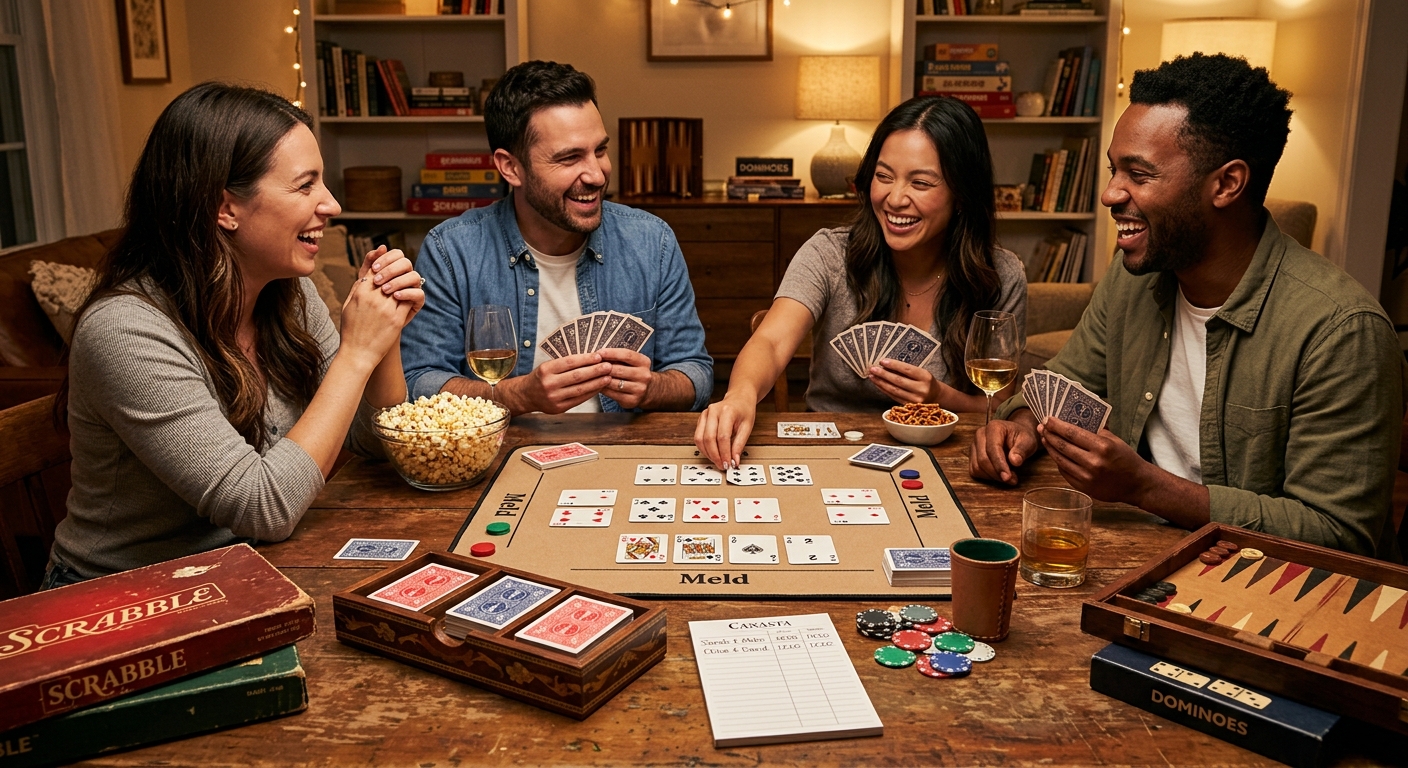
The best game nights don't just happen. They get built. You need the right mix of games, the right pace, and at least one moment where someone groans because they just lost a hand they thought was locked up. Canasta delivers that moment, reliably, every single time. If you've been thinking about making it the centerpiece of your next gathering, this guide walks you through exactly how to structure the evening from start to finish.
Game Night Blueprint
- Match your Canasta variant to your group size before the night begins
- Start with a fast warm-up game to loosen everyone up and build the competitive mood
- Budget 90 to 150 minutes for the main Canasta session, depending on which variant you pick
- Build in a structured break between rounds to reset concentration and keep energy up
- Keep the atmosphere relaxed. Canasta rewards patience, not pressure.
Why Canasta Works as a Full Evening's Main Event
Canasta has real depth. It rewards careful play, strategic meld-building, and reading your partner's signals across the table. The core rules are learnable in a single sitting, but the game holds experienced players' attention for hours. That combination is genuinely rare in card games.
The game has been pulling people together since the late 1940s. It spread from Uruguay across the Americas and into Europe within just a few short years. Its South American origins gave it a name that literally means "basket" in Spanish, a nod to the tray used to hold the draw pile. Something about that image, a shared pile that everyone reaches into, captures exactly what makes Canasta feel communal.
A great game night needs a centerpiece that holds the group's attention for most of the evening. Canasta does that without wearing anyone out. It has natural stopping points between rounds, which makes pacing the night far easier than you'd expect from a longer card game.
Choosing the Right Canasta Variant for Your Group
Not all Canasta variants run at the same pace or suit every group size. Picking the right one before the night begins is one of the most important decisions you'll make as the host.
How the Main Canasta Variants Compare for Game Night
| Variant | Players | Avg. Duration | Complexity | Best For |
|---|---|---|---|---|
| Classic Partnership | 4 | 60, 90 min | Medium | Most groups, mixed experience levels |
| Two-Player Classic | 2 | 45, 60 min | Medium | Head-to-head play, smaller gatherings |
| Hand and Foot | 4, 6 | 90, 150 min | Medium-High | Larger groups wanting a longer main event |
| Samba | 6 | 120+ min | High | Experienced players after a serious challenge |
| Three-Player Canasta | 3 | 60, 90 min | Medium | Odd-numbered groups, no one sitting out |
For most first-time Canasta game nights, Classic Partnership at four players is the sweet spot. Everyone has a partner to lean on, the rules are manageable, and the session runs long enough to feel like a proper main event without overstaying its welcome. If your group has played before and wants more of a challenge, Hand and Foot adds a satisfying extra layer without completely reinventing the experience.
Warming Up the Table Before the Main Event
The biggest mistake hosts make when planning a game night around a longer card game is starting with the main event too soon. People arrive at different times. They need a few minutes to settle in, grab a drink, and shift out of whatever headspace they arrived in. A good warm-up game does that work for you automatically.
You want something fast, easy to explain, and low-stakes enough that missing the first round doesn't matter. Dice games are ideal here. They level the playing field instantly because no one carries a strategic edge from past experience. Everyone understands how dice work. The rules are thin. The laughs come fast.
One option that fits this role perfectly is roll for it, a no-fuss dice game that gets competitive in minutes with zero setup. It carries the same classic-game energy as Canasta, just compressed into ten-minute bursts. Run two or three rounds while people are still arriving, and by the time you sit down for the main event, the table is already warmed up and everyone is in the right frame of mind.
Other solid openers include Farkel, Perudo (also called Liar's Dice), or even a few hands of a simple rummy variant. The purpose is the same regardless of which opener you choose. Get everyone talking, laughing, and a little bit competitive before the real stakes arrive.
Pacing the Evening So Nobody Burns Out
Once the warm-ups are done and everyone is settled, take five minutes to run through the Canasta rules or give a brief refresher for anyone who needs it. Keep it concise. A five-minute overview of the core mechanics is enough for most groups. If someone needs more help, the first round of actual play will teach them faster than any explanation ever could.
Here is how a well-paced Canasta game night tends to look in practice:
- First 30 minutes: People arrive, snacks go out, warm-up games fill the gap and get everyone laughing
- First 5 to 10 minutes at the table: Fast rules refresher, any questions answered, teams confirmed
- 60 to 90 minutes of Canasta: Play to an agreed point threshold or a set number of rounds
- 15-minute break: Refill drinks, stretch, review the scores, relive the best plays from the session
- Optional final round: 30 to 45 minutes if the group still has energy and wants to decide a clear winner
The break in the middle matters more than most hosts expect. Canasta demands sustained concentration. After an hour of focused play, attention naturally starts to drift. A structured pause resets everyone and often produces the best conversation of the night, as players relive the boldest moves and the worst discard pile decisions from the first session.
Setting Up the Physical Space for a Long Card Game
Canasta benefits from good lighting, enough table space for everyone to lay out their melds without crowding each other, and a clear central area for the draw and discard piles. These seem obvious, but they are genuinely easy to underestimate until someone's meld gets knocked into someone else's.
A dining table works better than a low coffee table for most groups. You want everyone at roughly the same height, with enough room that melds don't get accidentally mixed up or disturbed between turns. If you're playing partnership, seat partners across from each other, not side by side.
Keep score visibly. A sheet of paper in the center of the table, or a small whiteboard propped where everyone can see it, gives people something to react to between rounds. Visible scores create tension and discussion. A scorekeeper working privately tends to flatten that energy considerably.
Snacks that don't need cutlery keep the pace moving. Chips, nuts, olives, a cheese board, anything you can grab between turns without making a mess. Avoid food that leaves grease or moisture on fingers near the cards themselves.
Handling Mixed Skill Levels at the Same Table
Most real-world game nights include at least one or two people who have played Canasta before and a few who are learning on the spot. That is completely normal and it doesn't have to create friction at the table.
Partnership format is the most forgiving structure here. Pair an experienced player with a newer one on each team. The experienced player can quietly guide their partner without dominating every decision, and the newer player builds confidence fast because they're contributing to real strategy from the very first hand.
Resist the urge to simplify the rules too heavily for beginners. Canasta's scoring system and the concept of going out cleanly are exactly the parts that confuse newcomers, but they're also what makes the game genuinely exciting. A stripped-down version tends to feel flat and unconvincing. Let people learn by playing. They'll get it faster than you'd expect, and the confusion in early rounds usually becomes the funniest story from the night.
The Moment That Makes People Want to Come Back
A well-run Canasta game night leaves people wanting to schedule the next one before they've even left the house. That's the real measure of a good evening. Not whether everyone understood every rule perfectly, or whether the scores were close.
What creates that feeling is pacing. It's matching the variant to the group. It's a warm-up that gets everyone laughing before the stakes climb. And it's Canasta itself, with its swings in fortune, its moments of brilliant meld timing, and its occasional catastrophic misread of the discard pile, doing most of the heavy lifting on its own.
Plan the structure carefully, then trust the game. The friendly arguments, the groans over a missed opportunity, the comeback round where everything changes in the final few hands, those moments arrive naturally once the conditions are right. Your job as the host is just to build those conditions. Canasta handles the rest.